
Oapl Updates

Search
Loading...

ALFESS

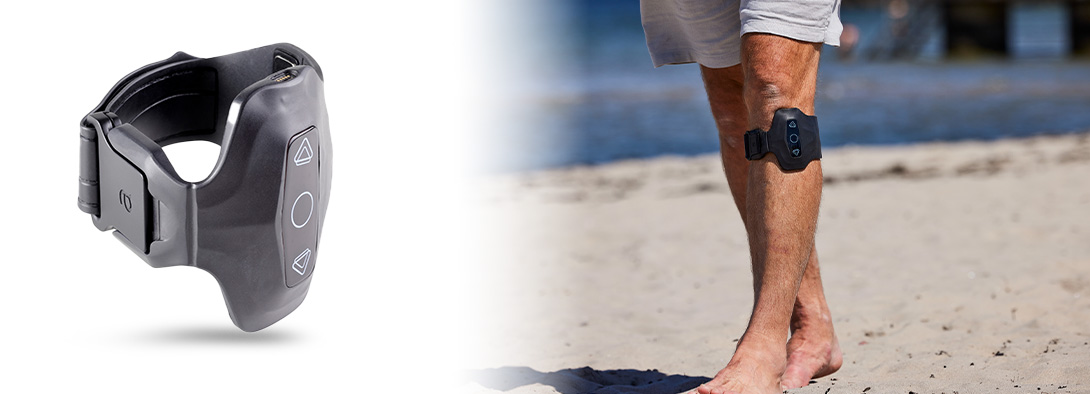
The ALFESS is an advanced functional electrical stimulation (FES) system for the treatment of drop foot. Designed to improve walking for individuals with the inability to safely and effectively clear their toes from the ground, the ALFESS uses FES to assist healthy nerves and muscles.
Why would I need to wear a ALFESS?

The ALFESS Functional Electrical Stimulation (FES) device has helped countless people walk with greater confidence and safety. It is worn by people that are experiencing a condition called foot drop which is caused by lower limb muscle and nerve injuries, muscle disorders, and brain and spinal disorders. As a result, people will experience difficulty lifting their feet whilst walking which is where the ALFESS device assists.

How does it work?

With each subsequent step, the ALFESS sends gentle, electrical impulses to nerves in the leg that tell the muscles to lift the toes. How does it know when to stimulate? Well, whilst wearing the ALFESS on the lower leg, an internal sensor identifies the leg motion and speed as the person takes just a few steps and then uses that information to create a customised walking program. Stimulation timing adjusts to accommodate changes in walking speed in real-time, ensuring appropriate stimulation with every step and enabling the user’s toes to clear the ground throughout their gait. Walking and training program adjustments can be made by the user to promote optimal results.

Benefits

Benefits of FES may include increased range of motion, decreased spasticity, enhanced strength and endurance, increased gait speed and improved quality of life.1


1. Damiano DL, et al. Neurorehabil Neural Repair 2013; 27(3):2000-2007; Downing A, et al. Int J MS Care 2014;16:146–152; El-Shamy SM, et al. AM J Phys Med Reahbil 2016 Sep; 95(9):629-63; Miller L, et al. Arch Phys Med Rehabil. 2017 Jul; 98(7):1435-1452; Prosser LA, et al. Dev Med Child Neurol 2012; 54(11):1044-1049; Stein RB, et al. Neurorehabil Neural Repair 2006; 20(3):371-379; Stein RB, et al. Neurorehabil Neural Repair. 2010; 24(2):152-167; Street T, et al. The Journal of Spinal Cord Medicine 2017; 41:3, 361-366.

Indications

  • Stroke
  • Multiple Sclerosis
  • Cerebral Palsy
  • Traumatic Brain Injury
  • Incomplete Spinal Cord Injury
  • Familial/Hereditary Spastic Paresis


    oapl have a vast array of experience treating patients with drop foot and successfully prescribing the ALFESS in conjunction with the NDIS and other state funding bodies. To book an appointment with one of our orthotists, please call us on 1300 866 275 or view our clinical locations here.

REQUEST APPOINTMENT

Loading...

Oapl Updates

Search
Loading...

Looking after your residual limb – Client Celf Care Guide


Loading...

Oapl Updates

Search
Loading...

Sunshine Orthopaedic Services Has Rebranded to oapl Sunshine Coast!

We are pleased to announce that Sunshine Orthopaedic Services has rebranded to oapl Sunshine Coast!

What does this mean for clients? 

Rest assured, whilst SOS has migrated to the oapl brand, business is as usual and clients will still be greeted by the same friendly faces! 

There are so many new and exciting devices that can be offered at our clinics in both the Prosthetic and Orthotic areas. OAPL can help facilitate clients in assessing, prescribing and fitting the devices that are the best fit for them across a range of funding bodies including NDIS, WorkCover, DVA, Insurance Bodies and more. 

If you would like one of our clinical team to contact you to learn more about devices, funding or any other questions you may have, please contact us through the form below! 

Contact Us

Loading...

Oapl Updates

Search
Loading...

How Prosthetics are Changing the Playing Field

I’m an amputee. Are there sports or activities that I can participate in?

Absolutely! Participation in sports and physical activity can significantly benefit people physically and psychologically. It’s no different for you either! The spirit of sports is often about overcoming challenges and pushing limits, and we can help you achieve just that in your chosen sports.

I want to learn more about amputees and sports!

Before the first official Paralympic Games took place in 1960, its purpose was rehabilitation for war veterans and civilians with impairments after World War 2. Since then, the Paralympic Movement steadily evolved from a rehabilitation sport, to recreational, to competitive sport. It’s enabled people like our Australian Paralympics Team to participate and compete in the sports they love!

Can I use prosthetics to participate in sport?

Managing physical strain and fatigue differently due to limb loss can be a barrier if you’re wanting to get back into sports – which is where prosthetics come in!

Prosthetics, which were commonly made from wood and leather, gave amputees more support when going about their daily lives, but were clunky, heavy, and difficult to clean, especially once perspiration was absorbed. It was in the 1970s when plastics, resins, and carbon fibre were introduced as lightweight alternatives, and once combined with synthetic sockets, prosthetics became much more comfortable as they were custom fitted for each patient.

Advancements in prosthetics have opened more doors and options for amputees, and it’s thanks to the countless hours of research, and specific skills of technicians that have made these advances in technology and adaptive equipment possible. Highly specialised prosthetics can be used for high-performance sports such as swimming, running, and cycling.

I’m an amputee that loves sport! What prosthetics are available for me?

Plenty! Prosthetics these days can vary widely in their design and function, impacting an athlete’s performance differently depending on the sport. We can provide you with a wide range of advanced prosthetics that empower you to perform at levels comparable to, or even exceeding those of able-bodied athletes in certain disciplines!

What prosthetics can I use for swimming?

Prosthetics that have been designed for swimming enhance mobility and comfort whilst swimming and diving. By attaching to the residual limb directly, it eliminates any discomfort caused by traditional fins and allows greater freedom of movement in the water, enabling safe participation in aquatic sports and therapy.

AMP Fin

What prosthetics can I use for running?

Prosthetics for running bridge the gap between the everyday foot, and sport specific prosthesis in a single device. These feet combine high flexibility and dynamic performance, making it perfect for not only flat surfaces, but also when transitioning to the gym, to tennis and basketball courts, or even to soccer, football, and lacrosse fields. They’re intended for patients that require competition level energy return.

AllPro series Blade XT Obsidian series
Available in Adult, Paediatric, and Posterior Mount Available in Standard and Mini Available in Adult, Paediatric, and Sprint
Also completely waterproof!


What prosthetics can I use for cycling / biking?

Whilst cycling, prosthetic feet can give unmatched energy transfer. This eliminates energy lost to weight caused by a foot shell and shoe, as well as energy lost due to shoe and foot shell flex. They’re design gives optimal power stroke, fit, and alignment for cycling, making it ideal for K3-K4 level ambulators who desire a lightweight, durable, and rigid foot.

Coyote Cyclone Bike Foot

What prosthetics can I use for kayaking and water sports?

Prosthetic attachments for gripping provide a more natural “wrist action”. This range of motion ensures better, more powerful control over the paddle whilst kayaking. Canoeing, rowing, and other water sport applications are also possible with handle modifications.

Hammerhead Pivot

What prosthetics can I use for a variety of sports?

Prosthetics that are suitable for a variety of sports have the unique feature of providing compression and rebound – quite unlike anything else on the market. They can be used for a diverse range of sports including wakeboarding, snowboarding, motocross, gym, and plenty more!

Moto Knee 2 Versa Foot 2

The Moto Knee and Versa Foot were designed by Mike Schultz, a paralympic champion and owner of BioDapt! These prosthetics can also be seen by other competitors in the Paralympics.

Where can I get a prosthesis for sport?

If you’re looking for a prosthesis for sport, visit your nearest OAPL clinic and discuss your options with one of our friendly and professional prosthetists. We are more than happy to help!

REQUEST APPOINTMENT

Loading...

Oapl Updates

Search
Loading...

oapl’s Newest Slacks Creek Clinic – Now Open!

oapl is very excited to introduce our newest State-of-the-Art Prosthetic and Orthotic Facility in Slacks Creek.

The new facility is designed to cater to the diverse needs of healthcare practitioners, featuring a fully functional workshop for on-site device creation and maintenance. The facility’s open and spacious layout has been purposefully designed to enhance the patient’s experience. Comfortable and welcoming areas for patient care are complemented by spaces dedicated to staff training and educational programs. This commitment to education not only empowers our team with the latest knowledge and skills but also promotes ongoing advancements in the field.

oapl has a long-standing history of serving the Queensland community through our distinguished brands, oapl Mansfield and Brisbane Prosthetics and Orthotics. With the establishment of this state-of-the-art facility in Slacks Creek, we are consolidating these operations into a single location.

This consolidation creates a true hub for multi-disciplinary care, bringing together experts from various domains under one roof. This synergy of expertise allows us to expand and enrich our clinic offerings, providing a comprehensive range of services to a wider client base.

At the heart of our mission is the commitment to delivering top-tier prosthetic and orthotic treatments. With this new facility, we are taking a significant step toward achieving this goal. The facility not only offers state-of-the-art technology but also fosters collaboration among healthcare professionals. This collaborative approach ensures that our clients receive comprehensive and integrated support, tailored to their unique needs.

Our vision for the Slacks Creek facility extends beyond providing exceptional care to our clients. We see it as a beacon of excellence in Prosthetic and Orthotic care, not only in Queensland but also in the wider region. OAPL’s dedication to fostering a holistic care model and driving industry growth is poised to make the Slacks Creek facility a cornerstone of healthcare innovation.

REQUEST APPOINTMENT

Loading...

Oapl Updates

Search
Loading...

The Diabetic Foot

Diabetes is known to cause neuropathy, which is damage to the nerves of the foot and lower leg, which can cause pain, tingling, altered sensation or even loss of sensation. Diabetes also causes blood vessels to narrow and harden, reducing the circulation of blood to the feet. Neuropathy and reduced blood flow can cause delayed wound healing, which increases the risk of foot complications. A poorly managed diabetic foot can result in callous, ulceration, vascular issues and poor skin quality that often lead to a decreased quality of life and is the leading cause of lower limb amputations.

Causes 

Anything that touches the skin increases the risk of ulceration, however, those with intact sensation will be able to feel when something is rubbing or digging in and is able to remove the cause. For individuals with neuropathy and associated poor sensation, they are unaware of the increased pressure and as a result, don’t remove it. This leads to an increase in friction or pressure, which damages the skin and causes a Pressure Injury (PI) 

What is a pressure injury and what do I look for? 

A Pressure Injury is caused by an increased pressure that can result in localised damage to the skin and soft tissue. This typically occurs over bony prominences or in the presence of an ill-fitting device (shoe) particularly in those with neuropathy.  

Pressure can appear to be a red area on the skin which is still present when there is no pressure being applied, swelling of the skin, localised heat or pain as well as a change in firmness or elasticity of the skin. Prolonged pressure causes skin breakdown which can appear as a graze or blister appears and result in an ulcer if left untreated. 

Importance of footwear 

Diabetes Australia has conducted extensive research and formulated a guideline for clinicians on the most appropriate management for diabetic feet. Throughout their findings, there is an emphasis on the prevention of disease and the importance of footwear. 

The guidelines recommend that individuals with diabetes should wear appropriate footwear that fits and protects their foot. Appropriate footwear options are shoes that have adequate length, width, and depth. The toe box is especially important as many shoes available in retail stores may have a narrow toe box which can apply unwanted pressures. 

Features to consider for appropriate footwear:

  • Toe box w/ sufficient width
  • Heel counter
  • Laces or Velcro fastening
  • Low heel height
  • Non-flexible midsole
  • Reduced inner seams


For those at a high risk of foot ulceration, footwear options should be consulted with a health professional who will be able to fit therapeutic footwear where necessary. These shoes differ to retail shoes in that they are specifically designed to fit individuals who need a larger width and depth in their shoe. These shoes also make it easier to fit orthotics and often have features which make them easier to put on.

As mentioned, anything that touches the skin can increase the risk of a PI. That’s why it’s important for those at a higher risk to check their feet for any areas of increased pressure after wearing shoes and their shoes for any foreign objects.

If you think you or someone you know has diabetes and is at risk of developing foot ulcers, see your local oapl clinic for prevention options.

We sell Diabetic friendly, extra depth/width footwear for you or your patients.

With a breathable nylon lined upper and a neoprene top, three removable EVA insoles are made with a latex top with an antimicrobial coating. They have a plush lining with minimal seams which is ideal for Diabetics or those with reduced/altered sensation.

These shoes feature a slip-resistant sole that can be worn indoors or outdoors, making them appropriate for hospital, rehabilitation, or even home settings. They are easily cleaned and can be washed at 40°C.

If you would like to see more, click here:

Leipzig Rehabilitation Shoe – BraceAble.com.au

Therapeutic Heidelberg Shoe | OPC Health


SmartKnit® seamless diabetic socks are soft and non-irritating made especially for people with diabetic and sensitive feet.

Completely free of seams, SmartKnit socks use a stretchy core-spun latex-free yarn that creates socks that conform to your feet to reduce wrinkling and bunching. Ionic™ silver fibres wick away moisture from the skin faster than other diabetic socks to control moisture levels, reduce blister-causing friction, and control odours. The non-binding Halo Top™ fits comfortably to hold up the sock and minimise indentations.

Seamless Diabetic Crew Socks – BraceAble.com.au


Loading...

Oapl Updates

Search
Loading...

Rhiannon’s Story

Rhiannon has been a below-knee amputee for 26 years, and as a mother of three young children, she is a true inspiration when it comes to overcoming obstacles.

Instead of allowing her amputation to hold her back, Rhiannon has always believed that every effort and hardship is worth it, as she explains, “I have endeavored most of my life not to let my disability define me or the life I want to lead. I teach my children that there is no limit to what can be achieved, no matter your physical limitations. Some days can be hard, but all of them are rewarding and worth every effort, and every bit of pain and hardship.”


Currently studying to become a nurse and eventually a midwife, Rhiannon has recently started working as a personal care assistant in an aged care facility. This role requires her to spend long periods on her feet, constantly moving for 8-10 hours a day. When not at work, Rhiannon spends most of her day running around after her three energetic children, including kinder drop-offs, playground visits, and games of chasey and hide and seek, often while carrying one or two of them.

Thanks to her amazing prosthetist, Rhiannon now has a prosthetic leg that perfectly suits her busy lifestyle. “I now have a leg that can meet my activity level requirements, and as I was able to customize the design of the socket, I can wear something that suits my personality as well. I enjoy choosing a design that my kids will enjoy seeing also.” Rhiannon is excited to test out her new prosthetic and get back into running and exercising at the gym.


At oapl we’re here to help you achieve your goals. Our team of dedicated and skilled clinicians understand the challenges faced by Prosthetic and Orthotic clients and are committed to supporting you. We have clinics right across Melbourne and the Mornington Peninsula, including Carrum Downs and the Amputee Rehabilitation Centre (Peninsula Health) in Frankston. In addition to these services, we are also a NDIS Registered Provider and can assist with all your NDIS needs related to Prosthetic or Orthotic (bracing) devices.

Loading...

Oapl Updates

Search
Loading...

Naked Prosthetics

Naked Prosthetics designs and fabricates durable, custom prosthetic devices specifically for those living with finger loss.

“Our mission is to assist people with finger amputation and to positively impact their lives by providing functional, high-quality finger prostheses.” With a range of options for varying degrees of finger loss, Naked Prosthetics finger prostheses continue to enable amputees to live active and independent lifestyles.

Product Range

PIPDriver™
Designed for individuals amputated at the middle phalanx. The PIPDriver™ is the most simple and intuitive to use. Because the device fits alongside the patient’s finger, we can anatomically match their PIP and DIP joints so it operates predictably and naturally. The PIPDriver™ offers exceptional daily utility. The second-generation PIPDriver™ combines the same reliable functionality with a new, sleek aesthetic design, improved hinges, and a variety of colour options for users.

ThumbDriver™
The newest product in our lineup shares its heritage with the MCPDriver™. It features a unique anchor design that tracks the patient’s natural CMC motion while still providing a rigid structure to react to the heavy forces generated by thumb opposition. The tip is positionable and articulates more subtly than in the MCPDriver™, which enables the most common thumb grasps.

MCPDriver™
Designed for amputations at the proximal phalanx, the MCPDriver™ restores the middle and distal phalanges. These dependently articulating pads help to create natural grip patterns. (The MCPDriver™ excels at restoring pinch, key, and cylindrical grasps as well as grip stability.) The durable metal frame and replaceable components allow users to return to particularly demanding lifestyles with confidence. The second-generation MCPDriver™ features improved aesthetic appearance and comfort, precision-machined components, and stylish colour options.

GripLock Finger™ *NEW*
The GripLock Finger™ is Naked Prosthetics’ elegant solution for amputations proximal to the MCP joint. This device can be worn in conjunction with our MCPDriver™, PIPDriver™ or ThumbDriver™, and provides the same colours and design choices our users love. Serviceable nylon fairings and silicone pads provide seamless aesthetics and improved grip stability while also preventing scratch damage to sensitive surfaces and objects handled by the user.


oapl have a vast array of experience treating patients with finger amputation.

To book an appointment with one of our prosthetists, please call us on 1300 866 275 or view our clinical locations here.

REQUEST APPOINTMENT

Loading...

Oapl Updates

Search
Loading...

5 Tips for Summertime Amputee Skin Care

Seasonal changes — spring to summer and summer to fall — present unique challenges for amputee skin care. Skin care plays a pivotal role as you maintain independence and mobility year-round. Whether it’s excess perspiration (summer) or dry skin (winter), most amputees have to make adjustments to their normal skincare routine according to the season. In the summer, hot temperatures and high humidity are the perfect conditions for excess perspiration, heat, and the growth of bacteria and fungus that contribute to a number of skin issues.


Greg Mannino Skiing

We consulted Greg Mannino, a six-time Paralympic gold medalist, prosthetist, and amputee to create a list of summertime skincare tips. With proper skin care, amputees can enjoy the summer sunshine even when the temperatures rise.

1. Cleanse, Cleanse, Cleanse

“Cleanse, cleanse, cleanse,” that’s the number one advice from Mannino. Prostheses create a ready-made breeding ground for heat-related skin issues. The environment inside the prosthesis around the skin is moist and humid with sloughing skin cells. It’s the perfect place for problematic “critters,” as Mannino puts it, like bacteria and fungus to grow and irritate the skin. They’re easy to mistake for heat rash, which can be an issue in and of itself, but good hygiene can prevent painful infections, lesions, ingrown hairs, blisters, and sores.

Most amputees already know that skin hygiene is imperative to their everyday health and success with their prosthesis. But in the summer, skin care needs a new level of attention. Amputees experience more perspiration than average because the body has to compensate for a loss of skin surface area. In addition, prostheses trap body heat and take more physical effort to use, resulting in even more perspiration.

Frequent washing of the residual, liner, and/or sock with a gentle daily cleanser that contains antibacterial and antifungal ingredients keeps the skin and the environment around it as clean as possible. Some amputees can maintain their skin health with one cleansing a day. But others may need two or three cleansing sessions or showers a day followed by regular applications of antibacterial and antifungal products to keep the skin clean.

2. Have a Cleansing Plan When You’re Away From Home

Plan to keep your residual and prosthesis clean while you’re on summer excursions. When you’re at the lake, beach, or on a mountain trail, you may not have quick access to your usual cleanser or a clean water source.

But the heat, moisture, and bacteria build whether you’re close to home or not, and heat and sweat increase bacterial growth. Mannino suggests bringing along a cleanser, liquid-to-powder, and additional socks and liners. In a pinch, a small amount of hand sanitiser can do a quick cleansing until you have access to your cleansing and moisturiser products. The point is that some cleansing, even a small amount, is better than no cleansing at all.

When you’re cleansing in an uncontrolled environment, be careful what the liner, sock, or residual touches after it’s been cleansed and before you put the prosthesis back on. Try to get everything cleaned, dried, and donned without touching surfaces that may harbor bacteria.

3. Change Liners and Socks More Often

“The real key is keeping the socket, liners, and socks clean — the cleaner, the better. The cleaner it is, the less likely you are to have skin breakdown,” says Mannino. You may need a few more extra liners and/or socks in the summer because it’s best to change them frequently. Be sure to cleanse them soon after taking them off so that sweat doesn’t cause odor or make any fabrics harden.

Clean sockets, liners, and socks are also vital because perspiration can cause them to slip and shift when you move. Not only is that uncomfortable, but it can also create sores on the residual and, “chaffing are where bacteria can enter the skin,” warns Mannino.

4. Moisturise Both Day and Night

Heat zaps moisture from the skin, and as the skin gets dry, it can alter the fit of the liner and/or sock. Moisturised skin stays supple and strong, making moisturisers a key part of summertime care. However, make sure the skin is completely dry before donning the prosthesis.

Antibacterial and antifungal moisturisers are a great daytime option because they provide hydration while fighting the growth of unwanted guests. Don’t forget about nighttime moisturization. The skin heals while you sleep, and a night moisturiser aids and promotes that healing.

5. Be Proactive if You Know the Perspiration is Coming

If you know you’re going to work hard, exert yourself, and get sweaty, advanced planning can save your skin and mobility. “In the summer months, you may need to be proactive. If you’re going to sweat more, use a liquid-to-powder preemptively,” suggests Mannino.

A liquid-to-powder product acts as your first defense against excessive perspiration and chaffing. Liquid-to-powder products go on like a regular moisturiser, but they dry to a powder, creating a protective barrier that reduces friction and irritation. These types of products also moisturise to maintain skin integrity. However, for extreme workouts or adventures, when you know you’ll be pushing your physical limits like a race or all-day hike, you can also apply an antiperspirant to your residual the night before.

Conclusion

When all is said and done, “You can prevent many of your own skin issues with good skin care and cleanliness,” says Mannino. Good skin care is part of life for amputees, but a proactive approach during the summer increases your chances of fully participating in your favourite activities. Cleanse, moisturise, and think ahead to make sure your skin stays strong enough for the rigours of life as an amputee.

REQUEST APPOINTMENT

Loading...

Oapl Updates

Search
Loading...

Prosthetic & Orthotic Management of Paediatric Conditions

Orthotic Management of Paediatric Conditions

Orthotists help manage orthopaedic conditions in children with a conservative approach to provide support or alignment correction to reduce pain and optimise their movement.

To clarify, an orthotic is not just something that goes in your shoe! An orthotic is any type of brace that is fitted to any part of your body to support and restore function in the hope to improve mobility, reduce pain and improve overall quality of life both in the short and long term. Below are some of the common reasons why children would need to see an orthotist from a young age.

Neurological Conditions Including Cerebral Palsy

AFO is short for Ankle Foot Orthosis and these types of braces can be used to help position children’s feet who may have weakness or instability in their legs due to Cerebral Palsy and other neurological conditions resulting in foot drop. Traditional AFOs are made of plastic from a cast of someone’s leg which is then used to mould and produce the final device.

Alongside AFOs, there is also the WalkAide available to paediatric patients. The WalkAide uses small electrical stimulations to activate the nerves and muscles in the leg to pick up the foot for children affected with foot drop. Unlike traditional AFOs, the WalkAide is worn on the leg and therefore can be worn barefoot around the home and even on the beach. It works when children walk, run and play, so no matter what activity they are doing they will still be safe and supported.

OAPL are also able to help paediatric clients who require fracture boots, plaster and fibreglass casts, foot orthotics and general bracing for the neck, wrist, knees, and everything in between.

Helmets for Plagiocephaly

Deformational Plagiocephaly often presents as an asymmetrical or uneven head shape. The back of one side of the head will be flattened, often resulting in changes in the forehead and ear alignment. An abnormal head shape caused during the birthing process should begin to correct over time, however if any flat spots are still apparent or new flat areas occur some form of intervention may be required.

In moderate to severe cases of deformational plagiocephaly a cranial remodelling helmet may be recommended. These helmets assist the skull moulding process by removing the pressure over the flat area, allowing the skull to grow into the space provided. Helmets are most effective between 4-12 months of age and results show that helmet therapy can be highly successful in achieving a more symmetrical head shape.

Fortunately, there is no need for a plaster cast when measuring for a remodelling helmet, all measurements are taken with a scanner on a phone and little bubs are free to move as they like! With access to 3D scans and measurements, the family can always track the remodelling process and decide the best course of treatment for their child moving forward.

Developmental Dysplasia of the Hip

Developmental Dysplasia of the Hip (DDH) is the dislocation of the hip due to the shallow and underdeveloped hip socket in some babies. There are various causes of DDH, including family history, breech delivery or a delivery that puts stress on the baby’s hip joints.

DDH is managed with an orthosis that is designed to put the baby’s hips and knees in a bent position to achieve optimal contact between the hip socket and the thigh bone for the hip joint to develop normally.


Prosthetic Management of Paediatric Conditions

Upper limb

Prosthetists don’t just treat lower limb amputations but also treat those with upper limb differences. The majority of upper limb amputee children are the result of congenital limb deficiencies. This can be caused by genetic abnormalities, growth restrictions such as amniotic band syndrome, exposure to viruses in utero and more. A lot of congenital abnormalities don’t always have an explanation as to why and this is particularly the case with upper limb deficiencies.

The sooner a child can begin using a prosthetic arm the better long-term user they will be. Often the first arm will be fitted once the child starts to crawl because they will find it useful when moving around.  These arms would be described as ‘passive’ because they are a hand that doesn’t move. They are shaped to help the child crawl, move objects and carry small items.

Once the child starts to get a bigger and has more cognitive function prosthetists then look at incorporating a hand/hook that has movement. This is normally just the thumb that moves and allows the child to grip and carry objects. The hand/hook moves by the child wearing a harness over their contralateral shoulder and by pulling shoulders forward allows the hand/hook to open and close.

Once a child has mastered using an upper limb prosthesis there are a range of functional attachments for the end of their prosthesis that will give them greater function and ability to try new activities. These might include a tumbler attachment for gymnastics, a guitar pick holder or attachment that allows the child to hold onto the bicycle handle bars.

Lower Limb

As with Upper Limb amputation, the majority of lower limb amputations in children are caused from congenital deficiencies at birth rather than trauma. Often children may be born with deficiencies that effect complete or partial absence of the fibula or tibia. This will result in the lower limb not forming correctly and can affect the length of bones, shape of limb and internal structures of the foot.

In many cases an attempt will be made to keep the limb, however in some cases, this is not possible and the limb will be amputated. If this is the case, it often happens when the child is still a baby.

Once the child has started crawling a cast for a prosthetic limb will be taken. This will be the time it starts to become useful and is often a simple design that is self-suspending.  This will allow the child propulsion when crawling but also let them progress to walking. Design wise, there are a vast range of fun designs that can be incorporated onto children’s legs to help encourage the child to wear them!

Children are amazingly resilient and because they have often grown up using a prosthetic limb they are often excellent walkers. They learn to walk using a prosthesis, grow up using a prosthesis and are able to participate in mostly any activity they choose. Once the child is old enough, prosthetists will endeavour to put them on componentry (Feet/Knees) that will enable them to participate in sport and play with their peers.

REQUEST APPOINTMENT

Loading...